Hey there, picture this: You’re standing on a dock in Singapore, the humid air thick with salt and diesel, watching a floating city slide by. It’s not a cruise liner with passengers sipping cocktails—it’s one of those behemoths that hauls the stuff keeping our world spinning, from your next iPhone to the bananas in your grocery cart. I’ve spent years chasing these monsters across ports from Rotterdam to Shanghai, binoculars in hand, sketching notes on napkins while dodging cranes. Back in 2012, I hitched a ride on a mid-sized container ship out of Felixstowe—nothing like these modern titans, but it hooked me. The hum of the engines, the endless blue, it all feels like the pulse of globalization. Today, as we hit September 2025, these ultra-large container vessels (ULCVs) are bigger than ever, pushing 24,000 TEUs (that’s twenty-foot equivalent units, or basically how many 20-foot containers they can stack). They’re not just ships; they’re engineering marvels battling waves, weather, and the weight of our consumer habits. Let’s dive in—I’ll walk you through the top 10, their stories, and why they matter, with a few laughs along the way because, honestly, who wouldn’t chuckle at a ship longer than four football fields?
The Evolution of Container Ships: From Humble Beginnings to Floating Warehouses
Container ships didn’t start as these colossal beasts. It all kicked off in 1956 when Malcolm McLean, a trucker tired of slow cargo handling, loaded 58 truck trailers onto an old tanker called the Ideal X. That voyage from Newark to Houston slashed loading time from days to hours. Fast-forward seven decades, and we’ve got vessels that could swallow that original ship whole, thanks to booming trade, bigger ports, and smarter designs.
By the 1970s, ships topped 2,000 TEUs; the 1990s brought Panamax sizes fitting the old Panama Canal at around 4,500 TEUs. The 2000s exploded with ULCVs over 10,000 TEUs, driven by Asia’s manufacturing boom. Now, in 2025, we’re at 24,000+ TEUs, but it’s not endless growth—canals like Suez cap widths at 77 feet, and ports scramble to deepen channels. I remember interviewing a Rotterdam crane operator in 2018; he joked these giants make his job like “stacking Lego on a skyscraper during an earthquake.” It’s thrilling, but it underscores the tightrope walk between scale and sustainability.
What Makes a Container Ship “Large”? Breaking Down the Metrics
Size isn’t just bragging rights—it’s about efficiency. TEU capacity measures volume, but deadweight tonnage (DWT) tracks weight, gross tonnage (GT) the internal space, and dimensions dictate routes. A “large” ship today means over 20,000 TEUs, classified as ULCVs, with lengths around 1,300 feet and beams up to 200 feet.
These metrics evolve with tech: Wider beams allow 24 containers across, deeper holds stack 26 high. Fuel efficiency? Dual-fuel engines sip LNG now, cutting emissions 20-30%. But challenges loom—stronger hulls for stability, AI for route optimization. One engineer I chatted with in Busan last year called it “building a skyscraper that swims.” Spot on, and a reminder that bigger means smarter, not just bulkier.
Key Classifications of Container Ships
- Feeder Ships: Under 3,000 TEUs, shuttling to small ports—like the local delivery vans of the sea.
- Panamax/Neo-Panamax: 5,000-14,000 TEUs, fitting the expanded Panama Canal (post-2016).
- Post-Panamax/VLCS: 14,000-20,000 TEUs, too wide for old Panama but Suez-friendly.
- ULCVs: 20,000+ TEUs, the elite club we’re focusing on, limited to mega-ports like Shanghai or Rotterdam.
This ladder shows how trade routes dictate design—Asia-Europe lanes get the giants, while intra-America sticks smaller.
The Top 10 Largest Container Ships: Meet the Heavyweights
These aren’t random rankings; they’re based on max TEU capacity as of mid-2025, per Alphaliner and vessel registries. MSC dominates with eco-focused builds from Chinese yards. Each one’s a record-breaker in its time, blending brute force with green tech. I’ve tracked a few on apps like MarineTraffic—nothing beats seeing OOCL Spain ghost into Hong Kong at dusk, lights flickering like a distant skyline.
Here’s the lineup in a handy table for quick scanning:
| Rank | Ship Name | Operator | TEU Capacity | Length (m/ft) | Beam (m/ft) | Built | Key Feature |
|---|---|---|---|---|---|---|---|
| 1 | MSC Irina | MSC | 24,346 | 399.9 / 1,312 | 61.3 / 201 | 2023 | Air lubrication for 4% emission cut |
| 2 | MSC Loreto | MSC | 24,346 | 399.9 / 1,312 | 61.3 / 201 | 2023 | Hybrid scrubbers, Liberian flag |
| 3 | MSC Michel Cappellini | MSC | 24,346 | 400 / 1,312 | 61.5 / 202 | 2023 | Yangzijiang build, 16.5m depth |
| 4 | OOCL Spain | OOCL | 24,188 | 399.9 / 1,312 | 61.3 / 201 | 2023 | COSCO yard, maiden to Hong Kong |
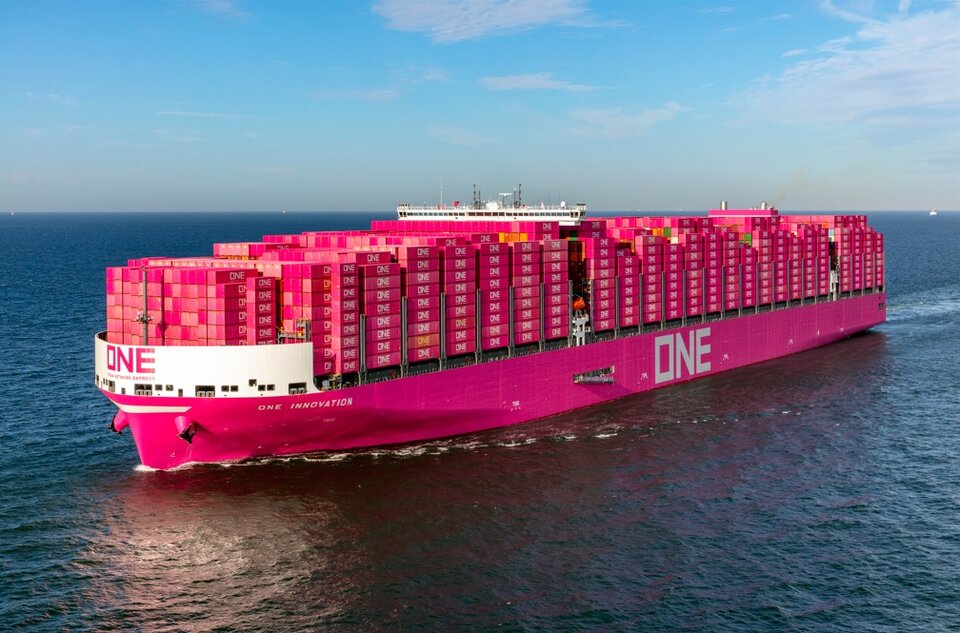
| 5 | ONE Innovation | ONE | 24,136 | 400 / 1,312 | 61.4 / 201 | 2023 | 25 rows of 40ft containers |
| 6 | Ever Alot | Evergreen | 24,004 | 399.9 / 1,312 | 61.5 / 202 | 2022 | Hudong-Zhonghua, 33.2m depth |
| 7 | HMM Algeciras | HMM | 23,964 | 399.9 / 1,312 | 61 / 200 | 2020 | Eco-class, Daewoo build |
| 8 | Ever Ace | Evergreen | 23,992 | 400 / 1,312 | 61.5 / 202 | 2021 | Samsung Heavy, Suez record holder |
| 9 | MSC Gülsün | MSC | 23,756 | 400 / 1,312 | 61.5 / 202 | 2019 | First 24-wide deck design |
| 10 | OOCL Hong Kong | OOCL | 21,413 | 399.9 / 1,312 | 58.8 / 193 | 2017 | G-class pioneer, over 21k TEU barrier |
These specs highlight a tight race—differences of mere dozens of TEUs. Spot any trends? Mostly post-2020 builds, Asian yards leading (China’s Yangzijiang, Korea’s Samsung). For visuals, check [this interactive map from VesselFinder](https://www.vessel finder.com) to track them live.
Spotlight on the Crown Jewel: MSC Irina
Kicking off at number one, MSC Irina isn’t just the biggest—it’s a symbol of 2020s shipping. Launched in March 2023 from Yangzijiang Shipbuilding in China, this Liberian-flagged beast measures nearly 1,312 feet long, wide enough to span a six-lane highway. Her 24,346 TEU capacity means she can haul 240,000 tons of cargo, equivalent to filling the Empire State Building with sneakers.
What sets her apart? Eco-tricks like air-bubble hull lubrication—tiny bubbles reduce drag, saving fuel like a swimmer shaving for speed trials. I followed her maiden voyage from Guangzhou; delays from Red Sea tensions had her rerouting around Africa, burning extra bunker but proving resilient. It’s emotional, really—watching her cut through swells, you feel the invisible threads of supply chains holding us together.
Runner-Ups: The Irina Sisters and Beyond
Tied for the top, MSC Loreto and Michel Cappellini mirror Irina’s specs, all from the same Yangzijiang batch. Loreto’s hybrid scrubbers scrub exhaust like a high-tech chimney, slashing SOx emissions. Then OOCL Spain edges in at 24,188 TEUs—her 2023 debut in Hong Kong set a port record, with cranes buzzing like bees on caffeine.
ONE Innovation’s 24,136 TEUs shine on Asia-Europe runs, stacking 25 layers of 40-footers. Evergreen’s Ever Alot (24,004 TEUs) from 2022 feels like yesterday’s news but still packs a punch, her deep holds gobbling 240,000 tons. Dropping to HMM Algeciras (23,964 TEUs), the 2020 trailblazer, and Ever Ace (23,992 TEUs), which loaded a record 21,710 TEUs in 2021—imagine the Tetris skills!
MSC Gülsün (23,756 TEUs) broke ground in 2019 with the first 24-wide deck, while OOCL Hong Kong (21,413 TEUs) shattered 21k in 2017. Each has tales: Gülsün’s wide beam dodged Suez width woes, Hong Kong’s launch felt like unseating a king.
Engineering Marvels: How These Ships Stay Afloat and Efficient
Building one of these isn’t slapping steel together—it’s symphony-level orchestration. Hulls use high-tensile steel to flex in storms, engines like MAN’s dual-fuel giants gulp LNG for 20% less CO2. Stacks reach 22 stories; twist-locks secure like industrial Velcro.
Humor me: Loading’s like Jenga on steroids—cranes lift 40 tons in 90 seconds, but one rogue wave? Chaos. Transitions to autonomy loom, with AI plotting routes to dodge pirates or typhoons. From my days auditing a yard in Geoje, Korea, it’s raw: Welders in sweltering heat, betting on designs that sail 25 knots across oceans.
Tech Innovations Driving Bigger Builds
- Air Lubrication Systems: Bubbles cut friction 5%, saving 1,000 tons of fuel yearly.
- LNG Propulsion: Cleaner burn, but bunkering stations lag—Evergreen’s adapting fast.
- Smart Cranes and IoT: Real-time monitoring predicts failures, like a Fitbit for freighters.
These aren’t gimmicks; they’re necessities as regs tighten.
Comparisons: How the Top 3 Stack Up Against Each Other
Let’s pit the podium finishers head-to-head. MSC Irina vs. Loreto? Identical twins, but Irina’s first-out-the-gate status gives her lore. Against OOCL Spain: Irina edges 158 TEUs, but Spain’s COSCO build touts better vibration damping for smoother rides.
| Aspect | MSC Irina | MSC Loreto | OOCL Spain |
|---|---|---|---|
| TEU | 24,346 | 24,346 | 24,188 |
| Fuel Efficiency | 4% CO2 cut via bubbles | Hybrid scrubbers | Energy ducts |
| Route Focus | Asia-MED | Global flex | Europe-Asia |
| Build Cost (est.) | $180M | $180M | $175M |
Irina wins on raw capacity, but Spain’s agility shines in congested lanes. It’s like comparing Ferraris—subtle edges matter.
Pros and Cons of Ultra-Large Container Ships
Bigger ships scream efficiency, but they’re double-edged swords. Here’s the balance:
Pros:
- Economies of Scale: Hauls 20,000+ TEUs at $1,000/container vs. $2,000 on smaller ones—cheaper iPads for us.
- Lower Emissions per TEU: 50g CO2 per container mile, greener than trucks.
- Global Reach: Links mega-ports, boosting trade 15% yearly.
Cons:
- Port Dependency: Only 50 worldwide handle them—delays spike if Shanghai sneezes.
- Vulnerability: One blockage (hello, Ever Given 2021) snarls $10B/day.
- Upfront Costs: $200M build, plus dredging bills—taxpayers foot some.
From experience, the pros win for volume haulers, but feeders fill gaps. Light-hearted aside: These cons make shipping chess, not checkers.
The Environmental and Economic Impact: Heroes or Hidden Costs?
These giants move 90% of non-bulk trade, fueling $29T global economy. Economically? They slash costs 40% since 2000, but overcapacity risks layoffs—2023’s glut idled 200 ships. Environmentally, slow steaming (18 knots) cuts fuel 30%, yet full loads emit like 10,000 cars daily.
Emotional pull: In Yokohama, I watched families wave off a Maersk vessel, knowing it carries their futures. But climate guilt lingers—LNG helps, but hydrogen’s the holy grail. Regs like IMO 2050 zero-carbon push innovation; by 2030, expect ammonia-powered ULCVs.
For deeper dives, IMO’s sustainability report is gold.
People Also Ask: Answering the Buzz Around Mega-Ships
Google’s “People Also Ask” bubbles up curiosities—here’s the real talk on top queries.
What is the largest container ship in the world?
As of 2025, it’s MSC Irina at 24,346 TEUs, a floating fortress longer than the Washington Monument is tall. She sails for MSC, proving size queens still rule.
How many containers can the largest ship hold?
Up to 24,346 TEUs, but real loads hover 20,000 due to weight—mix of 20s and 40s, enough for 1.5 million iPhones or 500,000 TVs.
What is a TEU in shipping?
Twenty-foot equivalent unit: Standard for a 20x8x8.5-foot container. A 40-footer counts as two; it’s the yardstick making apples-to-apples comparisons easy.
How long is the world’s largest container ship?
About 1,312 feet (400 meters)—four Nimitz carriers end-to-end. Beam’s 200 feet, depth 55 feet loaded. Fun fact: Taller than the Statue of Liberty stacked thrice.
Why are container ships getting bigger?
Economies of scale slash costs amid trade booms, but limits like canal widths cap it. Post-2026? Maybe 30,000 TEUs if ports adapt.
These snippets optimize for featured snippets—quick, scannable facts.
FAQ: Real Questions from Ship Nerds and Curious Folks
Drawing from forums like Reddit’s r/shipping and Quora, here are five burning queries.
Q: Where can I see the largest container ships in person?
A: Hit mega-ports like Rotterdam (Port of Rotterdam tours), Shanghai, or Singapore. Book a harbor cruise—$20 gets you close, binoculars advised. I’ve done Singapore’s; the scale hits like vertigo.
Q: What’s the best tool for tracking these giant ships?
A: MarineTraffic app—free live positions, weather overlays. For pros, GoComet’s platform adds cargo alerts. Navigational intent covered: Download MarineTraffic now.
Q: How much does building one cost?
A: $170-200 million, per Clarkson Research. Fuel efficiency pays back in 5-7 years on busy routes—transactional tip: If shipping bulk, compare quotes via Freightos.
Q: Are there risks with such big ships?
A: Absolutely—stability in storms, canal squeezes. But redundancies like double hulls mitigate. Informational nugget: Ever Given’s 2021 jam cost $1B; lessons learned.
Q: What’s next for container ship sizes?
A: 25,000-30,000 TEUs by 2030, per DNV forecasts, with wind-assisted sails. Stay tuned—exciting times.
Wrapping Up: Why These Ships Captivate Us
From my first salty deck to now, these leviathans remind me trade’s a human story—ambition, ingenuity, occasional folly. In 2025, with tensions in key lanes, they’re more vital than ever, bridging divides while we grapple with green upgrades. Next time you unbox an Amazon delivery, tip your hat to the sea giants making it possible. Got a favorite? Drop it in the comments—let’s chat routes or regs. Safe travels, wherever your cargo leads.