Imagine this: You’re crouched low in a jeep, heart pounding like a drum in your chest, as the golden light of dawn filters through ancient trees. A rustle in the underbrush stops everyone cold. Then, eyes like glowing embers meet yours—a Bengal tiger, sleek and striped, padding silently across the path. That moment? It’s not just a sighting; it’s a jolt to the soul, a reminder that our planet still holds secrets wilder than any dream. I’ve chased that thrill across continents, from the misty volcanoes of Rwanda to the icy fjords off California, and let me tell you, nothing beats locking eyes with nature’s masterpieces up close. These encounters aren’t just bucket-list checks; they’re humbling peeks into lives that thrived long before we showed up, urging us to tread lighter and leave room for the roar.
In a world where screens serve up endless animal clips, nothing replaces the raw, unpredictable magic of seeing them in their element. We’re talking about creatures so awe-inspiring they redefine “magnificent”—fierce predators, gentle giants, elusive ghosts of the peaks. This isn’t about zoos or staged shows; it’s the real deal, where the air hums with possibility and every shadow might hide wonder. Drawing from years of boots-on-the-ground adventures (and a few near-misses with charging rhinos that still make me chuckle), I’ll walk you through five standout species that demand to be witnessed wild. We’ll cover where to spot them, how to do it right, and why these meetings matter more than ever. Buckle up—your next heartbeat could sync with a whale’s song or a gorilla’s grunt.
Why Witnessing Wildlife in the Wild Beats Everything Else
There’s something primal about standing—quiet, small—amid creatures that don’t need us to exist. I’ve felt it in the hush before a tiger’s cough echoes through Indian jungles, or the spray of ocean mist as a blue whale breaches nearby. These aren’t performances; they’re unscripted symphonies of survival, where every flick of an ear or dive into the depths tells a story of resilience. And here’s the kicker: In an era of habitat crunch and climate chaos, showing up ethically pumps real cash into conservation—think anti-poaching patrols funded by your safari fees. It’s not guilt-free tourism; it’s active alliance. Plus, the rush? Better than caffeine, and way healthier for the soul.
The Elusive Bengal Tiger: Striped Sovereign of the Subcontinent
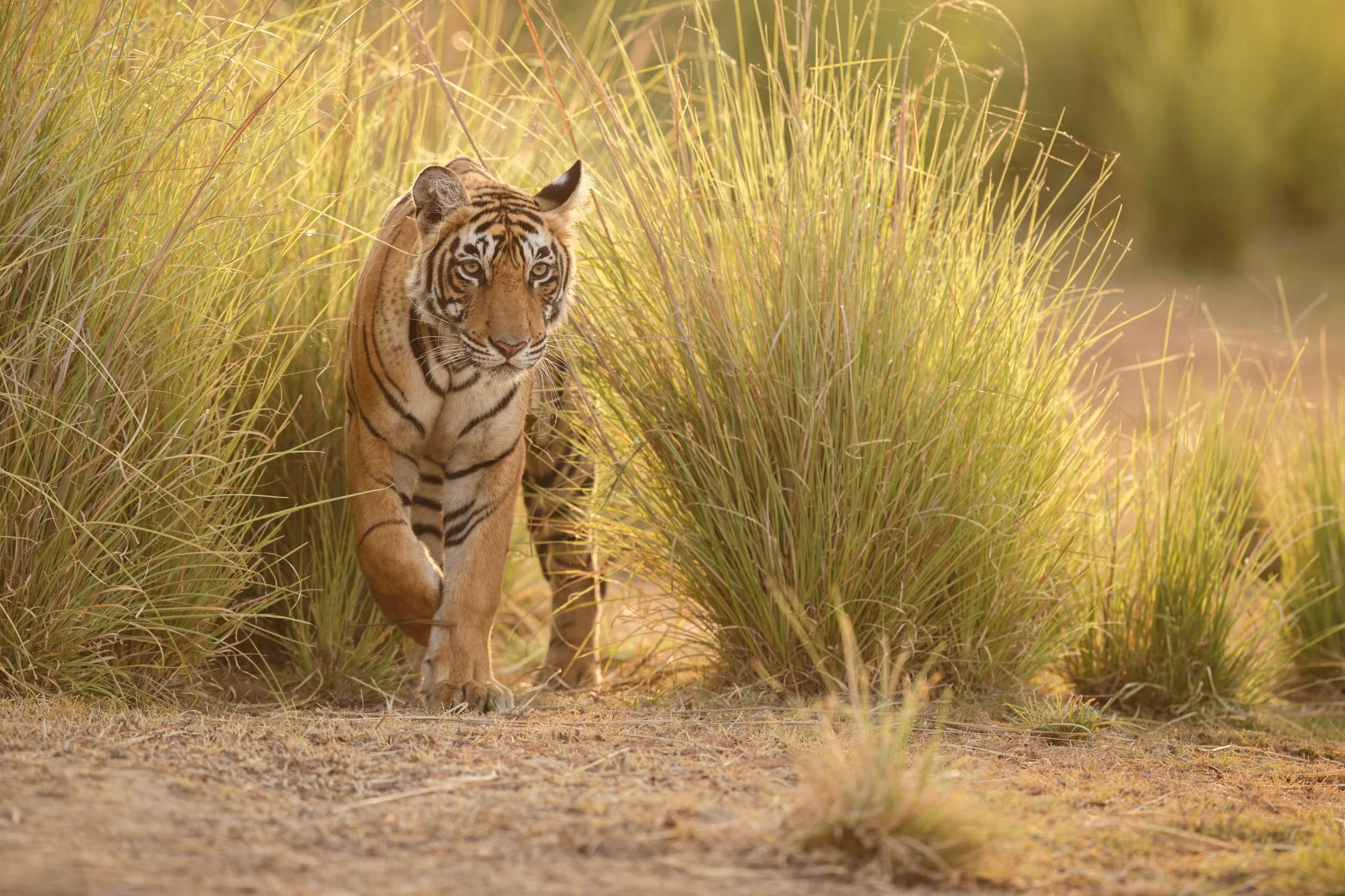
If big cats had crowns, the Bengal tiger would wear one forged from fire and shadow. These icons of power, with their burnished orange coats etched in bold black stripes, embody the untamed heart of Asia’s forests. Weighing up to 500 pounds and stretching nine feet long, they’re solitary hunters whose very presence commands silence. Spotting one feels like winning the wildlife lottery—not because they’re showy, but because they’re ghosts, blending into bamboo thickets until they’re upon you.
What Makes the Bengal Tiger So Captivating?
Their camouflage is poetry in motion, those stripes shattering light like fractured stained glass, perfect for ambushing deer in dappled shade. But it’s the eyes—amber pools of ancient cunning—that hook you, promising secrets from a world we can only glimpse. I’ve watched one drag a kill twice its size uphill, muscles rippling like a living map of evolution, and it hit me: This isn’t ferocity for sport; it’s precision honed over millennia.
Prime Spots for a Wild Tiger Encounter
India reigns supreme here, home to over 70% of the world’s 3,000-plus wild Bengals. Bandhavgarh National Park in Madhya Pradesh boasts densities that boost your odds to 80% on multi-day safaris, with jeeps rumbling through sal forests at dawn. Ranthambore in Rajasthan mixes ruins and tigers for a cinematic vibe—think ancient forts framing a cat’s prowl. For a quieter stakeout, head to Nepal’s Chitwan National Park, where riverbanks lure them for drinks.
How to Track Tigers Responsibly
Book through eco-lodges like Pugdundee Safaris—they cap vehicles per sighting to avoid stress jams. Go in winter (November to March) when thirst herds them to waterholes; expect 4-6 hour drives with guides who read pugmarks like tea leaves. Pro tip: Pack binoculars and patience—my first miss turned into a leopard bonus, but the second? A mother with cubs that had me tearing up behind my lens.
Pros and Cons of Tiger Safaris
| Aspect | Pros | Cons |
|---|---|---|
| Accessibility | Well-organized tours from Delhi; affordable entry (~$50/day). | Crowds in peak season can feel like a traffic jam. |
| Conservation Impact | Fees fund 24/7 patrols; tiger numbers up 30% since 2010. | Poaching risks persist—stick to certified operators. |
| Experience Level | High success rates with expert trackers. | Heat and dust test your grit (and laundry). |
Tiger spotting’s a gamble, but when it pays off? You’re not just seeing an animal; you’re touching the pulse of wilderness.
Mountain Gorillas: Our Mirror in the Mist
Deep in Africa’s Virunga volcanoes, where clouds tangle with ferns, live the mountain gorillas—gentle titans whose deep-set eyes reflect a kinship that tugs at your core. These silverbacks and their families, numbering around 1,000 worldwide, aren’t just big (chest-beating males hit 400 pounds); they’re emotional architects, forging bonds with grunts and grooming sessions that echo our own family ties. I’ve hiked slopes slick with rain to join a troop, and the way a juvenile tumbles into your lap (permitted, of course) erases the miles in a heartbeat of pure, unfiltered connection.
The Soul-Stirring World of Gorillas
What grabs you isn’t raw power but tenderness—a silverback’s protective glance over his young, or a mother’s patient forage amid wild celery. They’re vegetarians, munching 50 pounds of foliage daily, yet their world brims with drama: rival troops, playful scuffles, naps in sun-dappled clearings. It’s like peeking into a primate soap opera, one that makes you ponder our shared evolutionary path.
Top Destinations for Gorilla Trekking
Rwanda’s Volcanoes National Park edges out for accessibility—permits run $1,500, but the hour with habituated groups feels priceless. Uganda’s Bwindi Impenetrable Forest hosts half the population in denser, mistier woods; pair it with a chimpanzee track for double primate magic. Virunga in the Democratic Republic of Congo offers raw adventure, though check stability advisories.
Trekking Essentials and Etiquette
Start with a fitness check—these are 2-7 hour hikes through nettle-choked trails. Operators like Wild Frontiers provide porters (local women often, earning fair wages) and masks to curb human bugs. Maintain seven meters distance, no flash photos, and whisper—gorillas share 98% of our DNA, so colds are cruel currency. My trek ended with a chest-beat salute; I laughed through happy tears, feeling oddly… included.
Gorilla vs. Other Primate Safaris: A Quick Comparison
- Gorillas: Intimate, emotional; high cost, steep terrain. Best for soul-searchers.
- Chimps: Energetic tree-swingers; easier hikes, lower fees (~$200 in Uganda). Ideal for action fans.
- Orangs: Solitary redheads in Borneo’s canopies; boat-accessed, rain-soaked vibes. For quiet reflection.
These encounters aren’t cheap, but they fund rangers who fend off snares—your sweat equity saves lives.
Blue Whales: Ocean’s Colossal Ballerinas
Picture a heartbeat you can hear from miles away, a low moan that vibrates your ribcage. That’s the blue whale, Earth’s leviathan—up to 100 feet long, 200 tons of graceful bulk slicing seas like living submarines. Their mottled blue-gray hides shimmer in sun shafts, and those flukes? Broader than a semi-truck, propelling migrations that span hemispheres. I once bobbed in a Zodiac off Baja, dwarfed as one surfaced, barnacles glinting like jewels on its vast back. The scale? Mind-melting. The silence after? Sacred.
Decoding the Blue Whale’s Majestic Mystery
They’re filter-feeders, gulping 4 tons of krill daily through baleen sieves, lunging in euphoric blooms that look like slow-motion ballets. Songs travel 1,000 miles, courtship calls that puzzle scientists—love anthems or lost echoes? At 200 decibels, they’re louder than jets, yet their presence calms like a cosmic lullaby.
Where the Blues Sing Loudest
California’s Monterey Bay channels them February to April; boat tours from $50 hit 90% sighting rates amid kelp forests. Mexico’s Baja lagoons (Loreto’s Sea of Cortez) offer calf-nursing views—intimate, with dolphins as wingmen. For Antarctic epics, Sri Lanka’s Mirissa (March-May) yields surface feeds you can snorkel near (responsibly).
Whale-Watching Wisdom
Opt for small-vessel ops like Santorini Expeditions—drones and hydrophones amp the immersion without chase. Seas can churn, so Dramamine’s your friend; I popped one and still hugged the rail, but the breach? Worth every wave. Regulations cap approaches at 100 meters—respect it, or risk fines and fin slaps from activists.
Pros and Cons of Blue Whale Expeditions
- Pros: Ocean air therapy; multi-species bonuses (humpbacks, orcas). Supports marine sanctuaries.
- Cons: Weather whims; no guarantees (though odds favor you). Motion sickness lottery.
In their wake, you float smaller, yet strangely expanded—like the sea itself just shared its biggest secret.
Snow Leopards: Phantom Beauties of the Peaks
High in the Himalayas, where oxygen thins and winds howl like banshees, prowls the snow leopard—nature’s camouflage queen, her smoke-gray fur rosetted with black ghosts that melt into rocky crags. Elusive as myths, these 80-pound stalkers leap 50 feet to pounce on blue sheep, tails thick as scarves for balance on sheer drops. My first glimpse came at 15,000 feet in Ladakh: a tail flick over a ridge, gone in a puff. That tease? It hooked me harder than any trophy shot.
The Allure of the Snow Leopard’s Solitude
They’re loners, roaming 100-square-mile territories with a purr like distant thunder—solitary symphonies in stone. Prey scents guide them; paws pad silent as snowfall. Climate shifts squeeze their world, but resilient as their whiskers, they adapt, teaching us endurance in the face of melt.
Hidden Havens for Leopard Lurking
India’s Hemis National Park in Ladakh rules winter (January-March), when prey descends and cats follow—80% success with homestay-based scouts. Mongolia’s Gobi fringes offer vast, starry vigils; Kyrgyzstan’s Tian Shan adds yurt stays for cultural chaser. All demand acclimation—altitude bites back.
High-Altitude Hunting Tips
Layer like an onion (thermals, down, yak wool); join outfits like Nomadic Journeys for yak-trek access. Nights in frozen tents sharpen senses—guides brew chai while scanning with scopes. Humor helps: My numb toes once staged a rebellion, but the payoff? A mother teaching kits to stalk, pure poetry etched in frost.
Snow Leopard vs. Clouded Leopard: Spot the Differences
| Feature | Snow Leopard | Clouded Leopard |
|---|---|---|
| Habitat | High-altitude Asia (14,000+ ft). | Lowland forests, Southeast Asia. |
| Size/Build | Stocky, long-tailed for cliffs. | Arboreal acrobat, short legs. |
| Elusiveness | Mythic rare (4,000-7,000 wild). | Tree-dweller, easier in canopies. |
| Viewing Challenge | Freezing vigils, low oxygen. | Night walks, humid treks. |
These phantoms remind us: True beauty often hides in the hard-to-reach.
Bald Eagles: Sky Kings of the American Wild
Soar over salmon-choked rivers, and there they are—bald eagles, wings spanning seven feet, white heads flashing like beacons against azure skies. North America’s emblem, these fish-hawks snatch prey mid-dive with talons like curved daggers, then perch to devour with imperious poise. I picnicked once by Alaska’s Chilkat River, watching a pair aerial-dogfight over a catch; the screech? A victory cry that stirred something fiercely American in my veins.
The Bald Eagle’s Timeless Majesty
They’re comeback kids—from 400 pairs in 1960 to 300,000 today—thanks to DDT bans and habitat hugs. Nests balloon to pickup-truck size, reused for decades; mates for life, they court with sky dances that’d make poets weep. Power and partnership, wrapped in feathers.
Eagle Hotspots Across the U.S.
Alaska’s Chilkat Bald Eagle Preserve peaks November-December, drawing 4,000 for the preserve’s salmon feast—raft tours get you splash-zone close. Washington’s Skagit River bald eagle festival (January) tallies 600; Maryland’s Conowingo Dam offers dam-side drama with gulls as baitfish flurries.
Spotting Strategies and Safety
Dawn patrols via kayaks or blinds; apps like eBird map roosts. Respect 100-yard buffers—fines sting worse than talons. Winter’s bonanza, but spring nests thrill families. My foggy morning wait yielded a fledgling’s first flap—clumsy, triumphant, utterly human.
Pros and Cons of Eagle Viewing
- Pros: Accessible (road-trippable); free events abound. Conservation wins visible.
- Cons: Crowds at fests; cold snaps test resolve. Weather roulette.
From perch to plunge, eagles embody freedom’s fierce edge.
Comparison: Land vs. Sea vs. Sky Magnificence
| Category | Land (Tiger/Gorilla) | Sea (Blue Whale) | Sky (Snow Leopard/Eagle) |
|---|---|---|---|
| Scale | Intimate power (close treks). | Epic vastness (boat epics). | Aerial grace (high vigils). |
| Challenge | Jungle hikes, permits. | Sea swells, seasons. | Altitude/cold, patience. |
| Emotional Hit | Kinship, drama. | Awe, humility. | Freedom, resilience. |
| Best For | Heart-to-heart bonds. | Sense-of-wonder resets. | Solitude seekers. |
Each realm pulls different strings—pick your pull.
People Also Ask: Your Burning Wildlife Queries
Ever Googled mid-dream? Here’s the scoop on top curiosities.
What is the rarest animal to see in the wild?
Snow leopards top the list, with under 7,000 left and habitats like Ladakh’s peaks making sightings a 1-in-10 odds game. They’re not just rare; they’re reclusive artists of the alpine.
Where to get the best wildlife viewing gear?
Start with REI or Patagonia for binos (Nikon Monarchs shine) and quick-dry layers. For tech, Swarm Global offers satellite trackers—essential for off-grid safaris.
Best tools for planning a wild animal safari?
Apps like iNaturalist ID sightings on the fly; SafariBookings.com compares operators. Pack a journal—notes beat pixels for reliving roars.
How can I see endangered animals without harming them?
Choose certified ethical tours (WWF-endorsed) that limit groups and fund locals. Offset flights via Gold Standard; leave no trace, take only memories.
FAQ: Straight Talk on Wild Wonders
Q: What’s the biggest mistake first-time wildlife spotters make?
A: Chasing shots over silence. Guides know: Patience trumps pursuit. I once ditched my camera for a stare-down with a gorilla—best “capture” ever.
Q: How do I prepare physically for gorilla or leopard treks?
A: Build cardio with hill walks; core strength fights slips. Hydrate like a camel—dehydration sneaks up fast at altitude.
Q: Are these trips family-friendly?
A: Varies—tigers suit tweens up, but whale watches welcome all ages. Check kid quotas; my niece, 10, aced eagles but nixed tigers for “too sneaky.”
Q: How does seeing these animals help conservation?
A: Tourism injects $1B+ yearly into parks, hiring rangers and villagers. It’s not perfect, but it beats indifference—your ticket thwarts poachers.
Q: What’s one animal sighting that changed you?
A: For me, a blue whale’s tail slap—tiny human, infinite ocean. It flipped my “control” script to grateful witness.
There you have it—five portals to the wild’s wild heart. These aren’t just animals; they’re ambassadors urging us to protect what prowls, swims, and soars. I’ve chased them through sweat and storm, emerging changed: Smaller in stature, grander in gratitude. Your turn—grab that gear, book that berth, and step into the story. The wild’s waiting, whispering your name. What’s your first chase?