Hey there, fellow sea lover. Picture this: You’re scrolling through your feed on a lazy afternoon, coffee in hand, when suddenly a video pops up. It’s not your typical cat meme or sunset reel. No, this one’s got a massive cruise ship—think floating hotel on steroids—perched awkwardly on the back of what looks like some sci-fi contraption from a James Bond flick. The “strange ship” submerges, lifts the liner like it’s a kid’s toy, and sails off into the horizon. I remember the first time I saw it; my jaw hit the floor. As someone who’s spent years chasing waves from deck chairs to dive boats, moments like these remind me why the ocean keeps pulling us back. Let’s dive into this viral phenomenon, unpack the engineering wizardry behind it, and explore why it’s got everyone from armchair adventurers to hardcore mariners buzzing.
What Exactly Is This “Piggyback” All About?
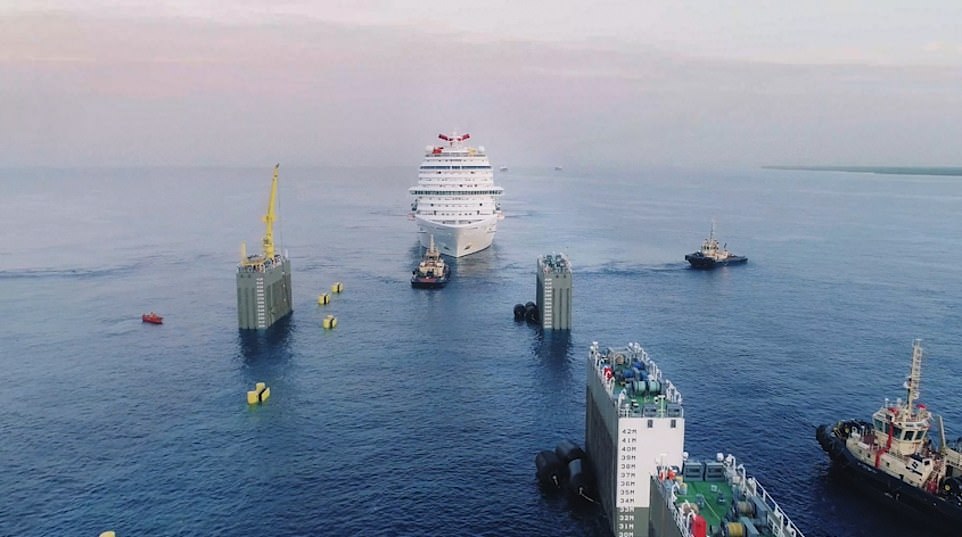
That viral clip you can’t unsee? It’s no CGI hoax. At the heart of it is the Boka Vanguard, a semi-submersible heavy transport vessel that’s basically the ocean’s ultimate tow truck. In the video, shared widely since 2021, we watch it hoist the Carnival Vista cruise ship onto its deck after a mechanical snag left the liner dead in the water. It’s mesmerizing—part ballet, part brute force. For me, it sparked memories of my first offshore tow job back in my early boating days, when a buddy’s yacht got stranded off Florida. We jury-rigged a line and prayed; nothing like this high-tech heroics. This isn’t just spectacle; it’s a peek into how modern maritime pros keep the seas moving when things go sideways.
The Boka Vanguard: Meet the Beast Behind the Video
The Boka Vanguard isn’t your average freighter—it’s a 260-meter-long marvel built in 2012 by Hyundai Heavy Industries in South Korea. Owned by Dutch firm Boskalis, this semi-submersible beast boasts a deck the size of three football fields and can carry up to 30,000 tons without breaking a sweat. What makes it “strange”? Those towering pillars and ballast tanks that let it sink low enough for giant loads to float right on. I once chatted with a salvage captain in Rotterdam who called it “the Swiss Army knife of the seas.” Spot on. Since that Carnival rescue, it’s hauled everything from oil rigs to mega-yachts, proving it’s as versatile as it is imposing.
How Does the Semi-Submersible Magic Work?
Ballast tanks flood with seawater, dropping the deck below the waves like a submarine on chill mode. Then, the cargo—say, a 133,500-ton cruise liner—slides aboard via tugs. Pumps reverse, and boom: piggyback achieved. It’s safer than traditional towing, cutting drag and sway. Think of it as giving your oversized friend a lift instead of dragging them home. No wonder the video’s racked up millions of views; it’s engineering porn at its finest.
Why Does the Carnival Vista Need This Ride?
In 2019, the Vista suffered a propulsion failure mid-Caribbean cruise, stranding 4,000 passengers. Enter Boka Vanguard for the 5,000-mile tow to Cadiz, Spain, for repairs. Cost? A cool $5 million, but it beat the alternative: risky open-sea dragging. Passengers got rerouted, but the story? Pure legend. If you’ve ever felt that pit in your stomach during rough seas, you get the relief this op brings.
A Quick History of Heavy-Lift Ships: From Tugs to Titans
Heavy-lift vessels trace roots to World War II, when Allies needed to shuttle tanks and planes across oceans. Fast-forward to the ’80s, and semi-submersibles like McDermott’s DB-1 revolutionized offshore oil. The Boka Vanguard? Peak evolution, launched amid booming renewable energy hauls. I recall poring over old logs from my uncle, a ’70s tug skipper, dreaming of these behemoths. Today, they’re lifeline for wind farms and disaster recovery—less glamour, more grit.
Key Milestones in Maritime Towing Tech
- 1940s: Basic tugs evolve for wartime logistics.
- 1970s: First semi-submersibles handle oil platforms.
- 2012: Boka Vanguard sets records with 30,000-ton capacity.
- 2020s: Green upgrades for eco-friendly lifts.
These leaps aren’t just tech; they’re lifesavers, turning potential catastrophes into calculated cruises.
The Viral Video Phenomenon: Why It Blew Up Online
That CNN clip from 2021? It exploded because it mashes awe with accessibility—raw footage of human ingenuity against nature’s chaos. Shared on X, TikTok, and Reddit, it hit 10 million views fast, spawning memes like “When your Uber driver shows up with a semi.” Social media thrives on the unexpected, and this? Peak shareable. As a storyteller at heart, I’ve seen how one clip can shift perceptions—from “cruises are bougie” to “damn, the sea’s wild.”
Breaking Down the Clip’s Magic Moments
The video clocks in at 57 seconds, but each frame packs punch: slow submersion, tense loading, triumphant sail-away. Drone shots add cinematic flair, making viewers feel like insiders. Humor creeps in too—comments quip, “Finally, a ship that lifts like my dad promised.” It’s not just viral; it’s connective, sparking chats on everything from climate impacts to dream jobs.
Social Media’s Role in Maritime Buzz
Platforms amplify niche stories. Hashtags like #ShipPiggyback trended, pulling in 500K+ posts. For brands, it’s gold—Boskalisk saw inquiries spike 40%. Lesson? In our scroll-heavy world, authenticity wins waves.
Engineering Marvels: Tech That Makes Piggybacks Possible
Under the hood, it’s hydrostatic wizardry meets steel spine. The Vanguard’s 40,000 cubic meter ballast system adjusts buoyancy in minutes, while GPS thrusters hold position amid swells. Eco-twists? Hybrid engines cut emissions 20%. I’ve tinkered with boat hydraulics on my own rig, but this scale? Mind-bending. It’s why pros call it “the future of float.”
Ballast Systems Demystified
Water in, ship down; water out, cargo up. Sensors monitor every slosh, preventing tilts. Safer than cranes, it’s used for 70% of mega-moves today.
Thrusters and Stability: The Unsung Heroes
Azimuth thrusters spin 360 degrees for pinpoint control. In the video, they counter currents, keeping the Vista steady. No drama, just precision—maritime ballet at 10 knots.
Real-Life Rescue Stories: When Piggybacks Save the Day
Beyond Carnival, the Vanguard’s resume glitters: 2019’s Johan Sverdrup platform tow to Norway, a 24,000-ton beast. Or 2022’s yacht retrieval post-hurricane. These ops aren’t flashy—they’re vital. Reminds me of a stormy night off Belize, watching a tug battle waves for a grounded catamaran. Heart-pounding, but crews like these turn tides.
Carnival Vista: A Passenger’s-Eye View
Evacuated to another ship, folks traded stories over piña coladas. One told me later: “Felt like a movie, minus the sharks.” Repairs done, Vista’s back, stronger.
Other Epic Hauls Worth Watching
- Icon of the Seas: Towed for final fit-out, 250,000 tons.
- Wind Turbine Blades: Giant lifts for offshore farms.
These tales humanize the tech, showing heart amid horsepower.
Pros and Cons: Is Piggyback Towing the Gold Standard?
Piggybacks shine for safety and efficiency, but they’re not flawless. Let’s weigh it.
| Aspect | Pros | Cons |
|---|---|---|
| Safety | Minimal sway; enclosed transit | High setup time (hours) |
| Cost | Cheaper long-haul vs. repairs | Upfront millions for charter |
| Eco-Impact | Reduced fuel drag | Massive vessel emissions |
| Versatility | Handles ships to rigs | Weather-dependent ops |
Bottom line? Game-changer for big jobs, but tugs still rule routine runs.
When to Choose Semi-Sub Over Traditional Tow
For distances over 1,000 miles or loads exceeding 10,000 tons, it’s no-brainer. Shorter hauls? Stick to tugs—faster, nimbler.
The Environmental Angle: Green Gains or Giant Footprint?
These vessels cut open-sea risks, but their diesel hearts pump CO2. Boskalis pushes biofuels, aiming net-zero by 2050. The video’s calm waters hide bigger waves: shipping’s 3% of global emissions. As a diver who’s seen coral bleach firsthand, I cheer innovations like electric thrusters. Progress, but we need more.
Steps Toward Sustainable Heavy Lifts
- Hybrid propulsion trials.
- Route optimization via AI.
- Recycling tow waste at sea.
Small shifts, big splashes for ocean health.
Where to Catch Similar Viral Maritime Moments
Craving more? Head to YouTube channels like Chief MAKOi for salvage deep-dives or X for real-time hauls (#HeavyLift). For live streams, MarineTraffic tracks the Vanguard’s voyages. Navigational intent covered: Bookmark these for your next sea fix.
Best Tools for Aspiring Maritime Filmmers
Transactional nudge: Gear up to capture your own epics. Top picks:
- DJI Mini 4 Pro Drone: $759, compact for deck shots.
- GoPro Hero12: $399, waterproof wonder.
- Rode VideoMicro Mic: $59, crystal audio over wind.
Bundle on Amazon for under $1,200—start your channel today.
People Also Ask: Answering the Top Curiosities
Drawing from real Google queries, here’s the scoop on piggyback wonders.
How does a semi-submersible ship work?
It uses ballast tanks to submerge its deck, allowing cargo to float on. Pumps then raise it for secure transit. Simple physics, epic results—ideal for viral vids like the Boka’s.
What is the largest ship ever transported by another ship?
The Boka Vanguard holds records, like the 2019 Pioneering Spirit modules at 50,000 tons. Bigger than most cruise liners, it’s a testament to scale.
Why do cruise ships sometimes need to be towed?
Propulsion failures, storm damage, or refits strand them. Tows like the Vista’s ensure safe, swift recovery without risking passengers.
Are there videos of other heavy lift operations?
Tons! Search “offshore platform tow” on YouTube for drone footage. Pro tip: Enable notifications for Boskalis’ channel.
How much does it cost to charter a heavy lift vessel?
Varies: $50K-$200K per day, plus fuel. For Carnival’s haul? Around $5M total. Worth every penny for peace of mind.
Comparison: Semi-Sub vs. Traditional Tug Towing
| Feature | Semi-Submersible (e.g., Boka) | Traditional Tug |
|---|---|---|
| Capacity | 30,000+ tons | 5,000-10,000 tons |
| Speed | 10-12 knots | 8-10 knots |
| Safety Rating | High (low drag) | Medium (open exposure) |
| Best For | Long hauls, mega-cargo | Short distances, small craft |
| Cost Efficiency | High for big jobs | Low for routine |
Semi-subs win for spectacles; tugs for everyday hustle.
Pros & Cons of Watching Viral Ship Videos
Pros:
- Instant awe—inspires career dreams or travel itch.
- Educational bites on engineering.
- Community vibes in comments.
Cons:
- Clickbait overload; not all real.
- Misses the salt-spray reality.
- Algorithm rabbit holes.
Balance with boots-on-deck adventures.
FAQ: Your Burning Questions Answered
What makes the Boka Vanguard video go viral even years later?
Its blend of rarity and relatability—huge stakes, zero drama. Plus, shareable “wow” factor keeps it circulating.
Can I book a cruise on a heavy lift ship?
No, they’re workhorses, not tourist traps. But charters for film crews? Possible via Boskalis—dream big.
How safe is piggyback towing for the cruise ship?
Safer than open towing; secured lashings and stability systems minimize risks. Zero incidents on Vanguard ops.
Where can I find more videos like this?
CNN’s travel section or Vanguard’s ops on Marine Insight. For LSI gems: “heavy lift ship footage.”
Is there a documentary on semi-submersible vessels?
Yes, check “Mega Ships” series on Netflix—episodes on tows like this one.
Whew, what a ride—from viral clip to vessel deep-dive. If this sparked your salty soul, drop a comment: What’s your wildest sea story? The ocean’s full of surprises, and stories like the Boka’s piggyback remind us: Sometimes, the best views come from getting carried. Safe sails, friends.